4 min read
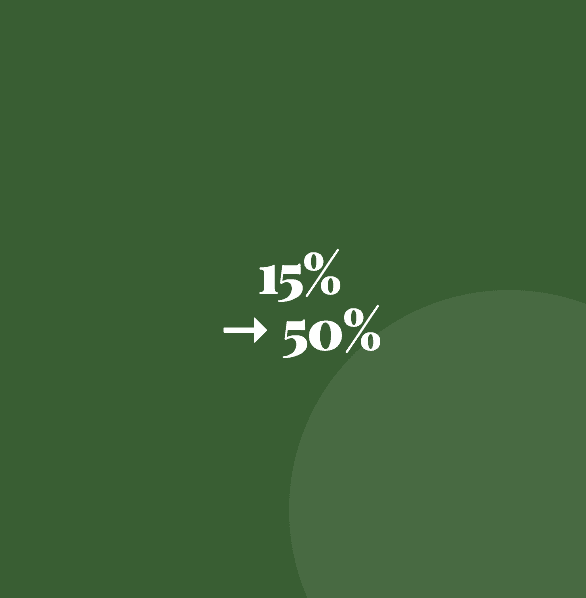
Medicare pays NP-owned practices 85% of the physician rate. For practices with the same overhead, that 15% gap quietly becomes a 50% cut in earnings. Here's the math.
Everyone in healthcare knows that Medicare pays nurse practitioners 85% of the physician fee schedule. It gets cited in policy debates, mentioned in job offers, occasionally used to justify lower salaries. What rarely gets examined is what that number actually means for an NP who owns the practice.
The gap between 85% and 100% sounds manageable. In practice, for a clinic carrying the same overhead as a physician-owned counterpart, it isn't.
The Math Behind the Gap
Consider a straightforward primary care visit. Medicare pays a physician-owned clinic $100. The same visit, billed by an NP-owned clinic, pays $85. The cost to deliver that visit — rent, staff, EHR, billing, malpractice — is the same in both cases. Call it $70.
The physician-owned clinic nets $30. The NP-owned clinic nets $15.
A 15% difference in revenue becomes a 50% difference in margin. Same patient. Same CPT code. Same overhead. Very different financial reality at the end of the month.
This is not a hypothetical. It is the operating condition of every NP-owned primary care practice billing Medicare under its own NPI.
Why This Rule Exists
The 85% rate is not based on outcomes data or quality comparisons. It is a product of the Balanced Budget Act of 1997, legislation written at a time when NP-owned independent practice was rare enough to be an afterthought. The statute established a reimbursement differential that made some sense in 1997, when NPs were largely working inside physician practices, and makes considerably less sense today, when NPs are the primary care provider for millions of patients — often in communities where no physician practice exists.
CMS does not have the authority to simply change this. It is written into federal law. Fixing it requires an act of Congress.
The Incident-To Wrinkle
The 85% rule applies when an NP bills under their own NPI as the treating provider. There is a separate billing pathway — incident-to — under which services provided by an NP inside a physician-owned practice can be billed at 100% of the physician rate, provided the physician is present in the office suite and has an established plan of care for that patient.
The practical result is this: an NP employed by a physician-owned practice may generate full reimbursement for their work. An NP who owns the practice does not. Ownership is, structurally, the thing that triggers the discount.
This is not a nuance buried in regulatory guidance. It is the defining financial reality of NP-owned primary care, and it shapes every business decision a practice owner makes — from how many patients they need to see to break even, to whether they can afford to hire, to how they think about expansion.
Where Commercial Payers Are Different
Medicare's 85% rate does not bind commercial insurers. They set their own fee schedules, and an increasing number are moving toward rate parity for NP-owned practices — particularly when the right information is in front of them.
In Duet's experience negotiating payor contracts on behalf of NP-owned practices, three factors consistently move the conversation:
Outcomes data. Payors respond to evidence. Quality metrics, utilization rates, preventive care engagement, and hospital avoidance data tell a story that the fee schedule alone does not. NP-owned practices that can demonstrate strong outcomes have leverage that practices without that data do not.
Panel size and covered lives. A single NP practice with 800 patients has limited negotiating power. A network of NP practices representing tens of thousands of covered lives in a payor's market is a different conversation entirely.
Access in underserved areas. In markets where NPs are the only consistent primary care option — rural counties, underserved urban neighborhoods — payors have a practical interest in keeping those practices financially viable. Scarcity creates leverage.
None of this changes overnight, and none of it happens without someone doing the work of making the case. But commercial parity is achievable in a way that Medicare parity, absent legislation, is not.
What This Means for Practice Owners
The 85% rule is not going away in the near term. That makes it a planning variable, not a grievance. NP-owned practices that are financially sustainable are built with this reality accounted for from the start — in their break-even math, in their payer mix strategy, in their approach to coding accuracy, and in their contracting posture with commercial insurers.
The practices that struggle most are often the ones that modeled their finances on physician benchmarks without adjusting for the reimbursement differential, then discovered the gap when margins tightened.
Understanding the rule is the first step. Building a practice that accounts for it is the work.
Duet works with NP-owned practices at every stage to build the billing, contracting, and financial infrastructure that makes independent ownership viable — including negotiating commercial contracts that don't start at 85%. Learn more about how we support NP-owned practices →