5 min read
What does an NP-owned primary care practice look like when it crosses $1M in annual revenue? We looked at the data across our network. Here's what separates them from the rest.

One of the most common questions from NPs considering practice ownership is also one of the hardest to answer honestly: what will I actually earn?
The difficulty is not that the information doesn't exist. It's that published benchmarks tend to describe a version of NP-owned practice that doesn't match the reality on the ground — averages that obscure wide variation, figures drawn from surveys that mix employed NPs with owners, and projections built on billing assumptions that don't hold up in practice.
We looked at billing data across data-connected practices in Duet's network over the past twelve months. The practices crossing $1 million in annual allowed revenue — and we're seeing more of them — average $1.73 million. What separates them from the rest of the network is not luck or geography. It is a specific set of operational decisions, made consistently.
The Numbers
Across all data-connected practices in our network, practices under $1M averaged approximately $249,000 in annual allowed revenue, seeing around 712 unique patients and processing roughly 2,000 claims per year. Average allowed per claim: $124.
Practices crossing $1M average $1.73 million in annual allowed revenue, seeing approximately 2,593 unique patients and processing over 10,400 claims per year. Average allowed per claim: $163 — 32% higher than their lower-revenue counterparts, on top of seeing more than three times as many patients.
That per-claim gap is important. It means high-revenue practices aren't just seeing more patients. They are collecting more per visit, which reflects better coding accuracy, stronger payer contracts, and more consistent add-on code capture.

Provider Count Is the Foundation
Practices crossing $1M average 8.4 providers. Practices under $1M average 2.8.
This is the most straightforward finding in the data and the most important one to state plainly: a solo NP practice has a ceiling. Not because of clinical capability, but because revenue is constrained by the number of billable encounters a single provider can generate in a year. Adding a second or third provider — whether a second NP, an MA functioning at the top of their scope, or another clinician — is the primary mechanism by which NP-owned practices move from a comfortable income to a genuinely scalable business.
The practices that have crossed $1M have, without exception in our network, done so by building a clinical team rather than optimizing a solo operation.
Coding Accuracy and Add-On Capture
High-revenue practices average a complexity score of 3.89 versus 3.74 for the rest of the network — a modest but consistent difference that reflects better documentation of visit complexity. More striking is the add-on code gap: $1M+ practices capture an average of 0.64 add-ons per visit, compared to 0.26 for practices under $1M. That is more than twice the rate.
Every add-on code represents work that was already done in the exam room. The difference between practices that capture it and practices that don't is almost entirely operational — documentation templates, billing workflow, and whether someone is systematically reviewing for missed codes.
Payer Mix and Contract Posture
High-revenue practices carry a higher Medicare share — 34.9% of claims versus 19% for the rest of the network. Medicare volume at scale, paired with strong HCC capture and value-based care participation, supports revenue in ways that a commercially-heavy panel at lower volume does not.
The $163 average allowed per claim for high-revenue practices — versus $124 for the rest — reflects commercial contracts that have been negotiated rather than accepted at default rates. Practices that revisit their payer contracts as their panel grows, armed with outcomes data and volume, consistently achieve higher per-claim reimbursement than those that signed once and moved on.
Every High-Revenue Practice Has a Daily Huddle
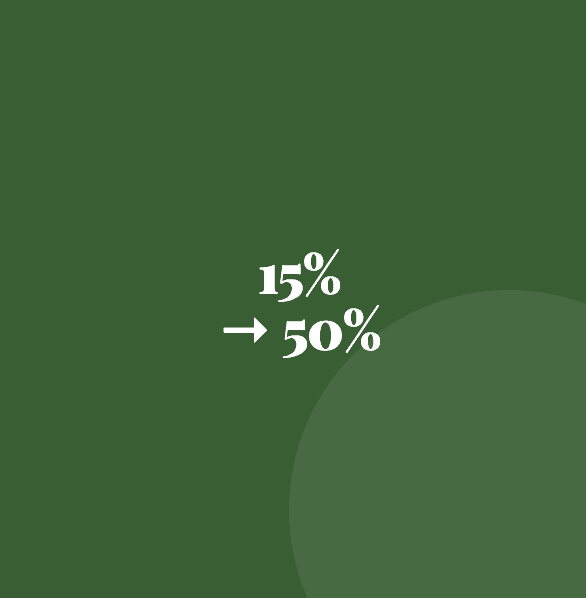
One operational finding stands out for its consistency: 100% of practices over $1M in our network use a daily huddle. Among practices under $1M, that drops to 83%.
The daily huddle — a brief pre-clinic review of the day's schedule, patient care gaps, and billing flags — is not glamorous infrastructure. But it is the mechanism by which high-performing practices convert clinical awareness into billing action. Upcoming AWVs get flagged. Chronic disease patients due for follow-up get identified. Add-on code opportunities get surfaced before the visit rather than missed after it.
Similarly, 100% of high-revenue practices have completed Duet's coding bootcamp. Among practices under $1M, 59% have. The practices that have invested in documentation discipline at the clinical level — not just billing review after the fact — consistently outperform those that haven't.
What This Means for Practice Owners
The path to $1M in an NP-owned primary care practice is not a mystery. It requires building a clinical team beyond a solo provider, maintaining documentation discipline that captures the complexity of care being delivered, holding payer contracts to a standard rather than accepting defaults, and implementing the operational infrastructure — daily huddles, recall systems, coding review — that converts clinical volume into accurate revenue.
None of these are out of reach for a practice that is deliberate about building them. And none of them require compromising the quality or character of care that motivated opening a practice in the first place.
The practices in our network that have crossed this threshold serve large, complex, often underserved patient panels. They have not sacrificed the mission of independent NP-owned primary care to achieve financial scale. They have built the operations to sustain it.